- EN
-

In modern hydroponic agriculture and greenhouse cultivation, seedling beds serve as the core facility during the initial stage of crop growth, directly affecting seedling survival rate, uniformity, and subsequent yield. With 15 years of in-depth experience in hydroponic technology, HydroBlue has launched three series of seedling beds: tidal, multi-tiered, and rolling types. Through precise environmental control, space-optimized design, and intelligent operation, these beds meet diverse needs ranging from home gardening to large-scale commercial production.
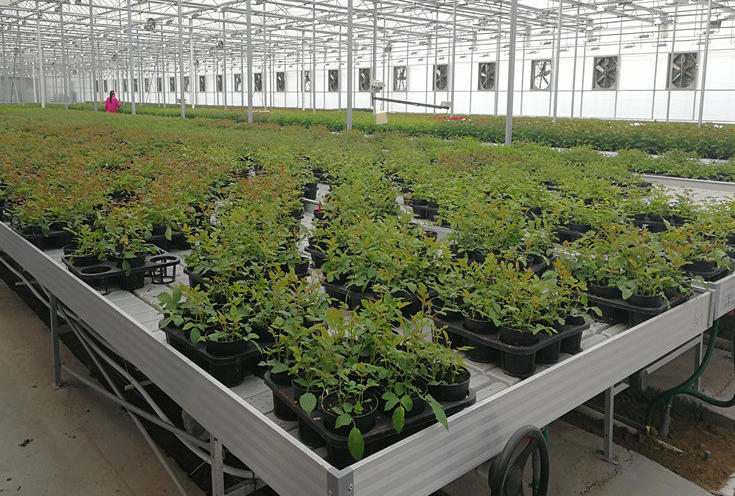
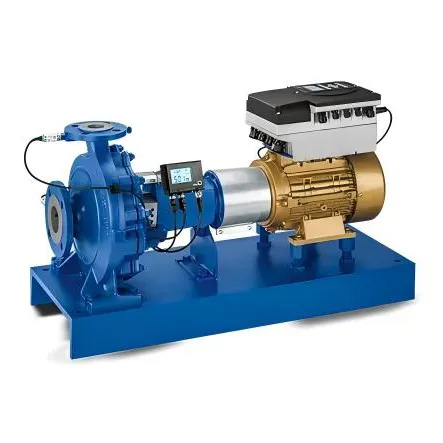
The tidal seedling bed is designed around the core concept of simulating natural tidal movements. It creates a balanced environment of water, nutrients, and air for seedling roots through periodic nutrient solution irrigation and drainage cycles. Its working process consists of three key stages: Flooding Phase, where an intelligent timer controls the pump to inject nutrient solution rich in nutrients and oxygen into the planting tray, soaking the roots for 5-15 minutes; Draining Phase, after the pump stops, the nutrient solution fully flows back to the reservoir under gravity; Aeration Phase, where roots absorb oxygen from the gaps in the substrate until the next cycle starts, with up to 6-8 cycles per day.
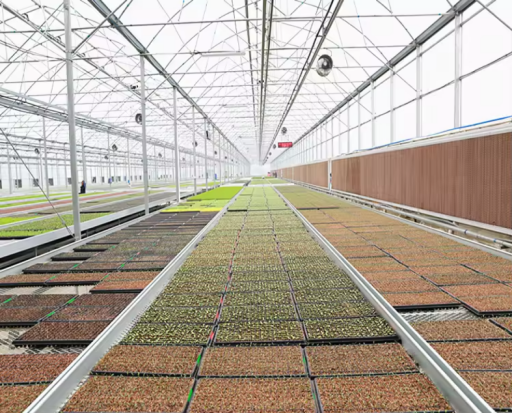
This type of seedling bed adopts ABS plastic panels, hot-dip galvanized brackets, and thickened aluminum alloy frames, ensuring corrosion resistance, strong load-bearing capacity, and resistance to deformation in high-humidity environments. The bed height and width can be flexibly customized, and the length supports splicing and extension, making it suitable for various scenarios such as sightseeing greenhouses, scientific research greenhouses, and ecological restaurants. Its core advantage lies in high resource utilization efficiency, saving 30%-50% of water and fertilizers compared to drip irrigation. Meanwhile, the alternating wet and dry cycles effectively prevent root hypoxia and fungal diseases, promoting uniform and robust growth of seedlings.
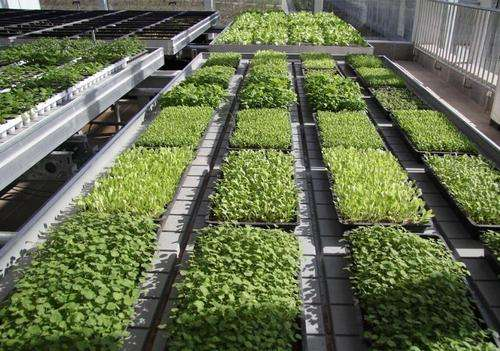
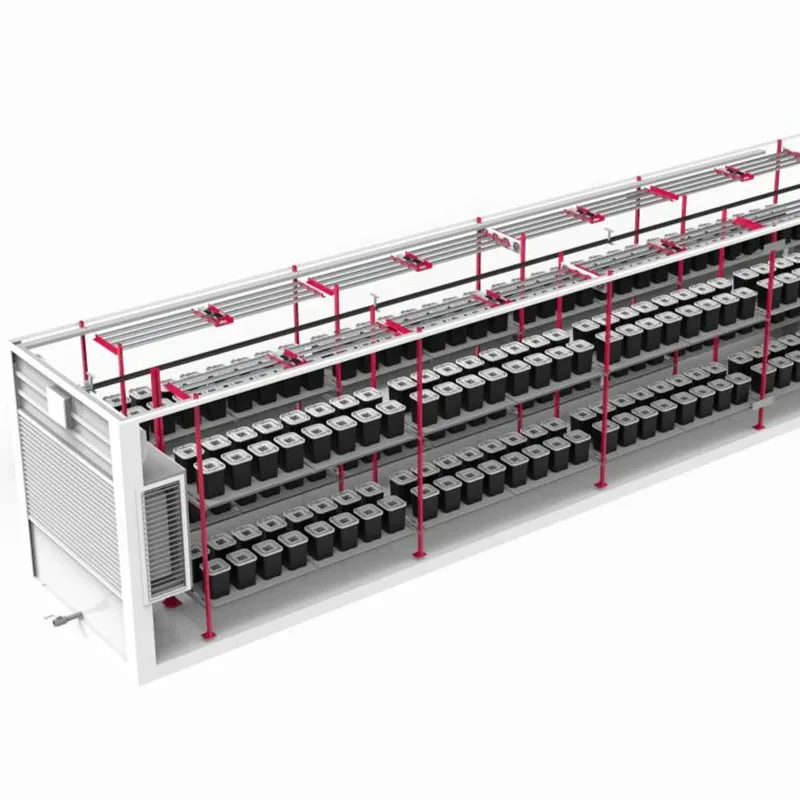
Addressing the pain point of low space utilization in traditional single-layer seedling beds, the multi-tiered tidal seedling bed adopts a three-dimensional shelf structure to achieve vertical expansion of planting space. Its brackets are made of high-strength steel or corrosion-resistant metal, with a rust-proof surface treatment, ensuring a long service life in humid environments. Each layer is equipped with an independently adjustable irrigation system to ensure that every seedling receives uniform water and nutrient supply.
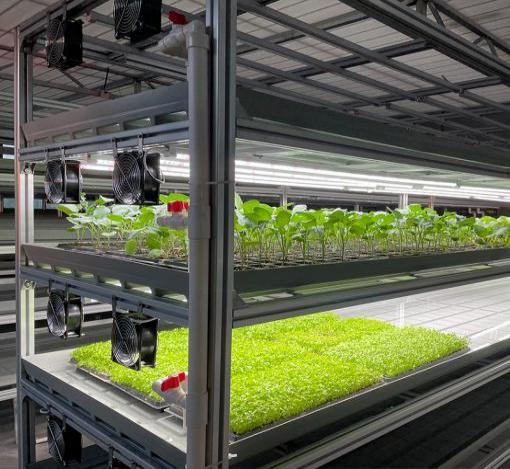
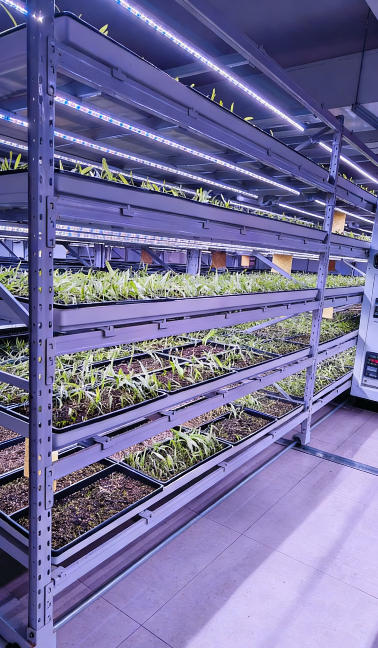
The inter-layer design emphasizes ventilation and light transmission, effectively avoiding waterlogging and root rot. It also supports the placement of seedling trays of various specifications, adapting to the seedling needs of different crops such as vegetables, flowers, and herbs. This type of seedling bed can double the seedling area without occupying additional floor space, making it particularly suitable for urban farms, small greenhouses, and home gardening scenarios. Its sturdy yet lightweight structure allows for easy assembly and maintenance, making it a cost-effective choice for small to medium-scale growers seeking to maximize production in limited areas.
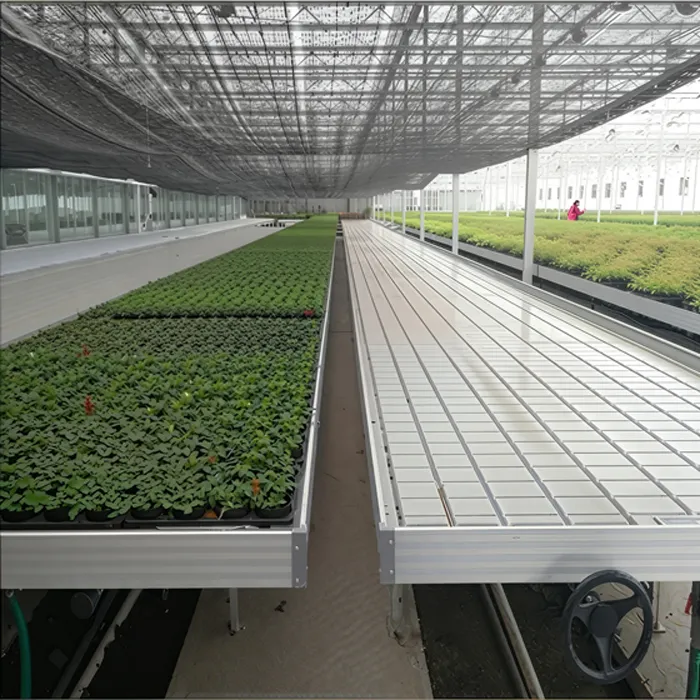
With its innovative movable design, the rolling bench tidal seedling bed has become a core equipment for large greenhouses to improve space utilization. The bed is connected via rollers and a track system, allowing for easy merging or separation, significantly reducing the space occupied by greenhouse aisles and increasing land utilization by 20%-30%. Operators do not need to move back and forth; all operations such as watering, fertilizing, monitoring, and transplanting can be completed at a fixed position, reducing labor intensity by more than 50%.
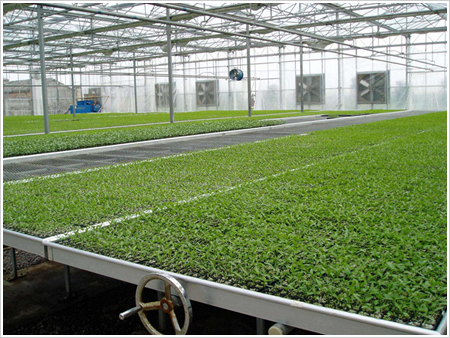
Equipped with anti-tip brackets, heavy-duty support structures, and adjustable balance feet, the seedling bed ensures stability and safety during movement. Its tidal irrigation system is consistent with fixed seedling beds, realizing the recycling of nutrient solution, balancing efficiency and environmental protection. Suitable for large-scale commercial seedling bases, greenhouse plantations and other scenarios, it is particularly suitable for modern agricultural production models that require frequent adjustment of planting layouts, providing a flexible solution for intensive and intelligent cultivation.