- EN
-
Smart agriculture is a comprehensive agricultural development model that takes the Internet of Things (IoT) technology as the core to realize the digital and intelligent upgrading of traditional agriculture. Through the linkage of sensors, software systems with mobile or computer platforms, it achieves precise perception, intelligent control, and scientific decision-making in agricultural production. It also covers diversified formats such as agricultural e-commerce, agricultural product traceability, leisure tourism, and information services, injecting strong momentum into agricultural modernization.
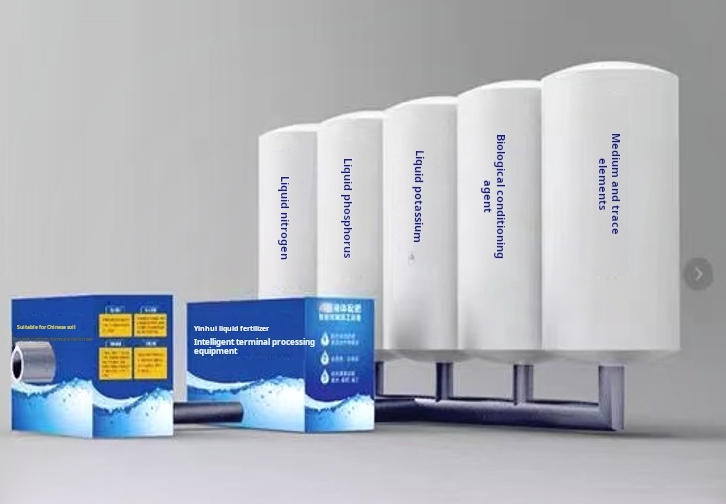
At present, smart agriculture has formed a relatively complete technical application system. In the core production link, the irrigation head unit has realized the whole-process intelligence: the intelligent scheduling water storage system can use water sources such as well water and river water and support remote automatic water regulation; the three-stage filtration system effectively reduces the clogging risk of the drip irrigation system; the high-standard liquid fertilizer micro-factory integrates inorganic, organic, and microbial fertilizers, customizes formulas according to crop types, growth stages, and soil nutrients, and realizes "on-demand fertilizer preparation and on-site use". It not only saves more than 40% of fertilizer usage but also reduces packaging and circulation costs. The mobile water and fertilizer integrated system greatly reduces the investment costs of main pipeline laying and multi-unit equipment through equipment sharing, improving resource utilization efficiency.
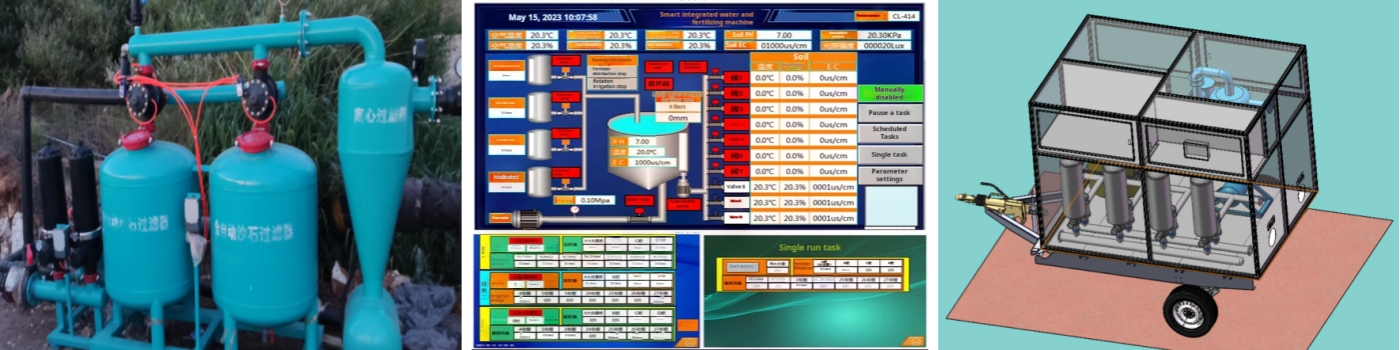
The wide application of IoT-based intelligent devices has become an important support for smart agriculture. Digital water outlets, wireless valve controllers, and other devices seamlessly connect with the fertilizer micro-factory system through communication technologies such as LORA and 4G, realizing refined operations such as zoned irrigation and pressure balance.
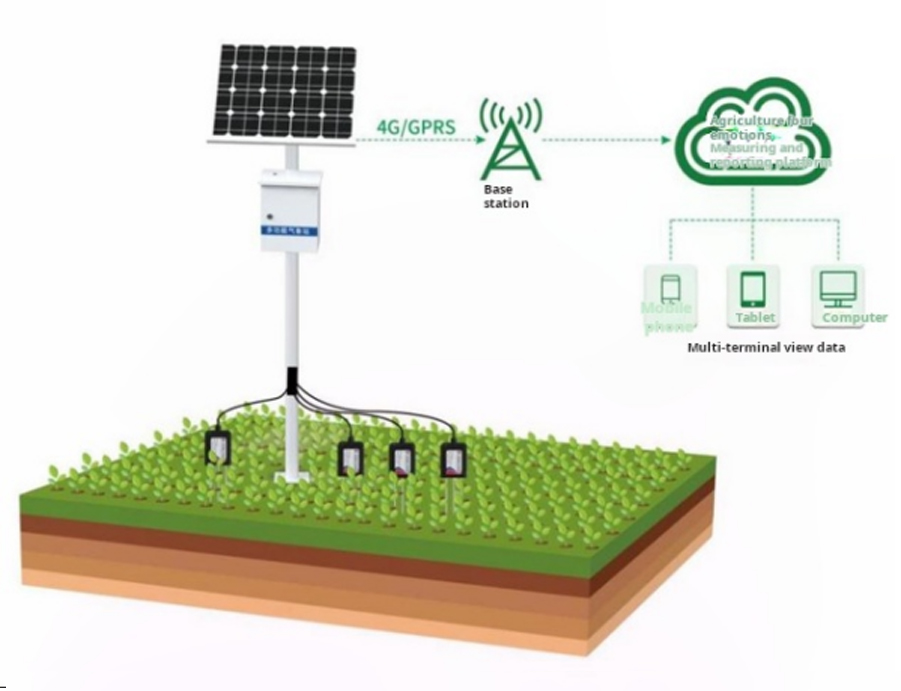
The agricultural four-condition (soil, seedling, pest, and meteorological) monitoring system has matured. The soil moisture monitoring system adopts FDR (Frequency Domain Reflectometry) technology to collect real-time parameters such as soil temperature and humidity, pH value, and electrical conductivity. It accesses the IoT platform through 4G modules and the MQTT protocol, and automatically alarms via SMS, voice, and other methods when exceeding the threshold; the seedling condition monitoring system is equipped with an 8-megapixel camera, supporting 350° horizontal rotation and high-definition video monitoring, and the solar-powered mode is suitable for long-term field operations; the intelligent pest monitoring system realizes automatic statistics of pest species and quantities through LED pest-trapping light sources, air suction-type insecticidal technology, and AI image recognition; the solar weather station monitors indicators such as wind speed, wind direction, temperature and humidity, light, and rainfall 24 hours a day, providing comprehensive data support for production decisions.
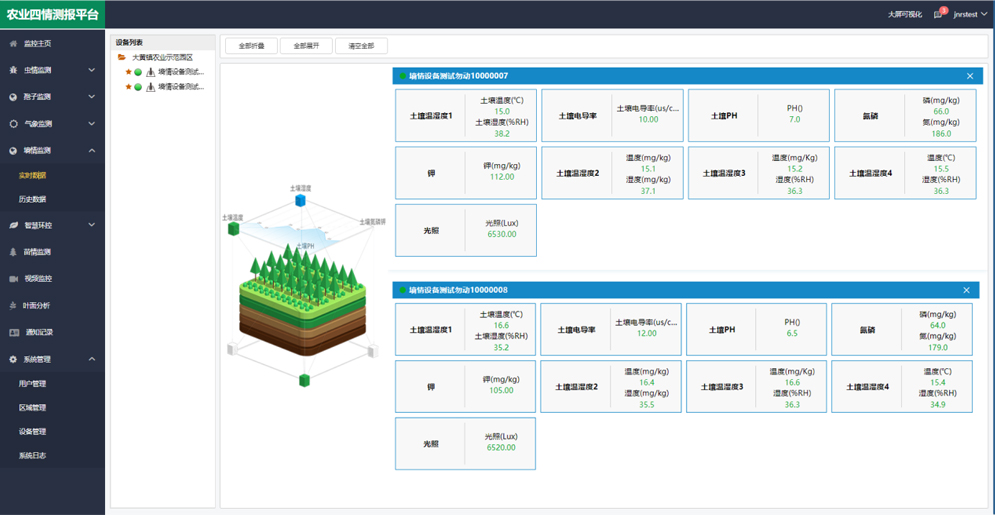
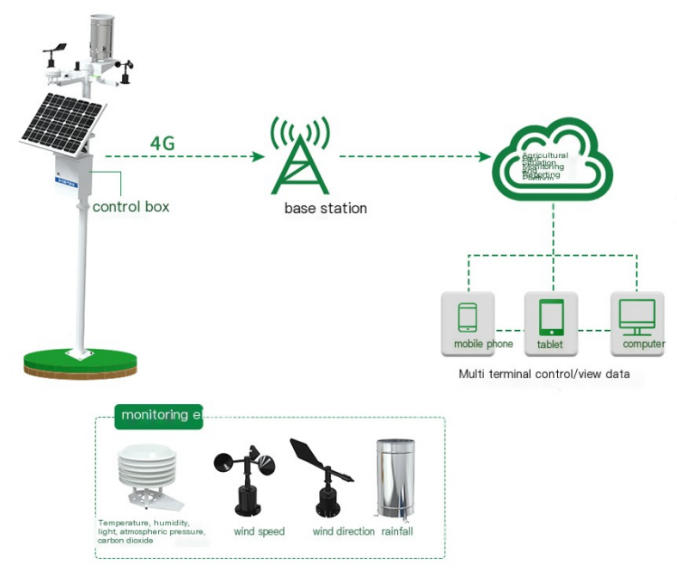
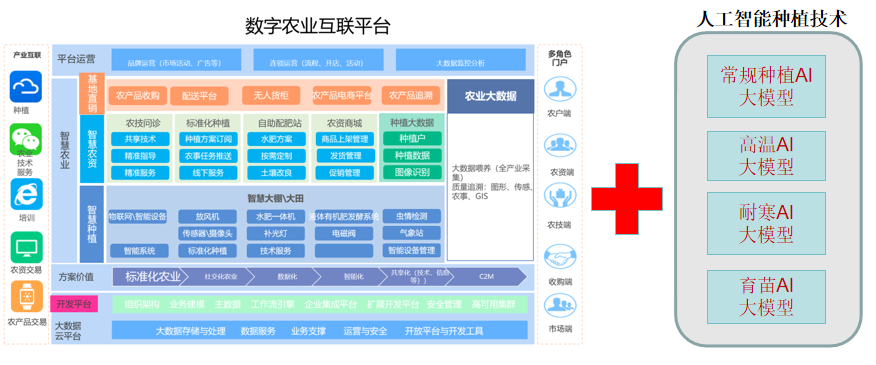
The construction of digital agriculture platforms has made industrial management more efficient. The platform integrates functions such as AI planting models, standardized planting management, digital command centers, and traceability live streaming to achieve multi-role collaboration: farmers can obtain precise water and fertilizer schemes, agricultural task pushes, and agricultural technical consultation services; the agricultural technical end provides customized planting schemes through big data analysis; the market end links e-commerce platforms and traceability systems to ensure the traceability of agricultural product quality. Project cases in Xinjiang, Ningxia, and other places show that smart agriculture technologies have been applied in the planting of strawberries, grapes, tomatoes, watermelons, and other crops, increasing yields by 15%-30% and achieving significant growth in cumulative yields.