- EN
-
In Dubai, the arid climate and limited arable land pose significant challenges to traditional agriculture. However, HydroBlue's container farming system has emerged as a key force in improving local food security. A Dubai-based enterprise has recently partnered with HydroBlue to deploy a customized container hydroponic facility. This not only addresses the city's reliance on imported leafy greens but also provides guests with direct access to fresh, pesticide-free agricultural products. This case study will demonstrate how HydroBlue's technology adapts to extreme climates and urban constraints to create a sustainable local food supply chain.
Dubai's desert climate is extremely harsh: summer temperatures exceed 45°C, annual rainfall is less than 100 millimeters, and groundwater has high salinity. These factors make outdoor cultivation nearly impossible. More than 90% of the city's leafy greens and herbs are imported from neighboring countries, leading to a series of problems:
Lengthy Supply Chain: It takes 3-5 days for agricultural products to reach Dubai, resulting in a 20-30% loss of nutrients. The shelf life is also shortened to only 2-3 days after delivery.
High Costs: Import tariffs and transportation fees increase the final cost of fresh vegetables by 40-50%.
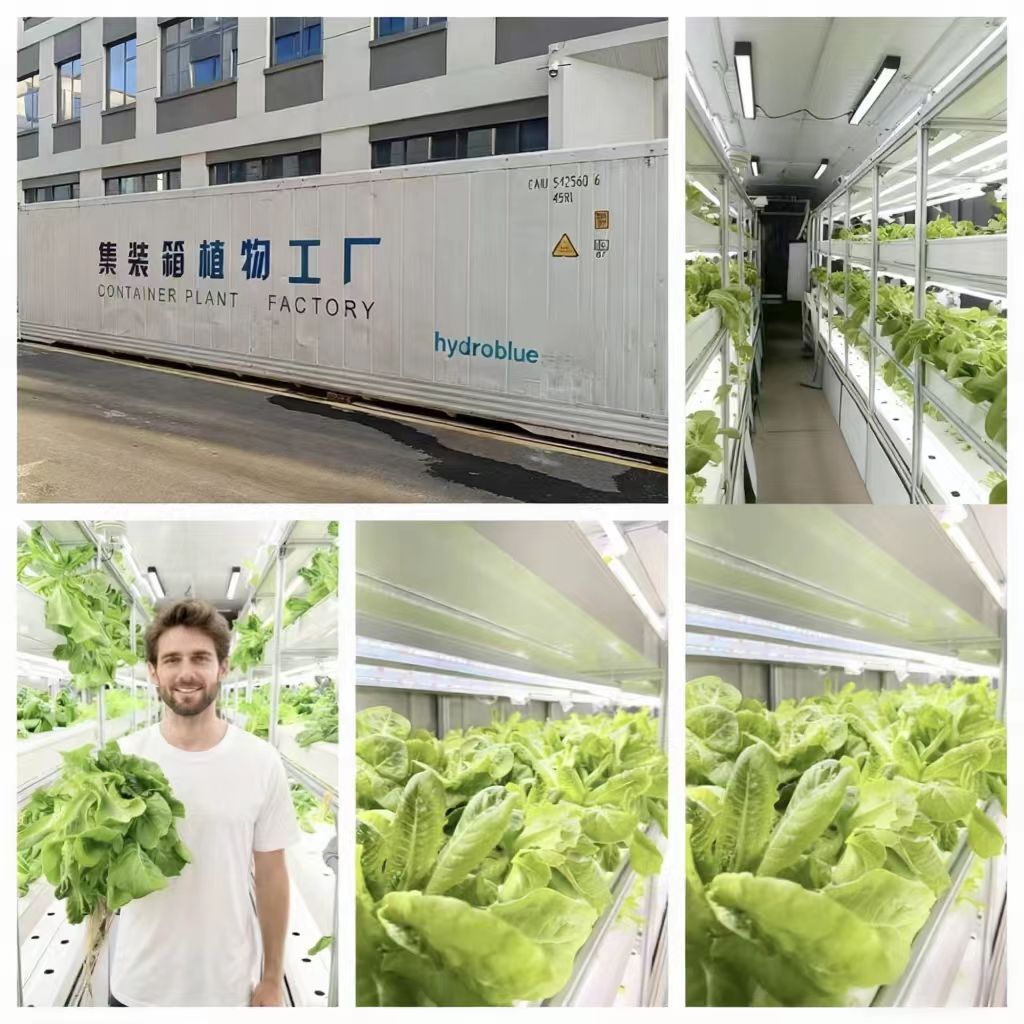
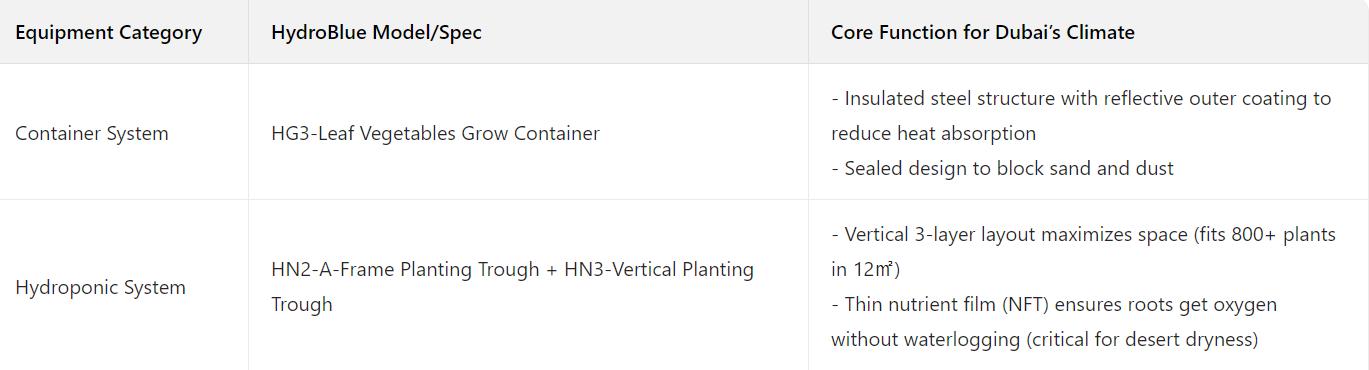
This project is centered on HydroBlue's HG3 leafy greens cultivation container (a modified 40-foot shipping container), combined with an NFT hydroponic system for sale and advanced environmental control equipment, to cope with Dubai's high-temperature and arid environment. The main hydroponic farming equipment configurations are as follows:
The system was fully operational 45 days after installation, and the first batch of leafy greens was harvested in just 28 days. Currently, it can produce 300-350 kilograms of leafy greens per month, which is sufficient to meet 100% of the daily demand for fresh salads and decorative vegetables. 95% of the water is recycled, significantly reducing monthly water consumption.
Import tariffs and transportation costs are eliminated. The shelf life of fresh vegetables is extended to 7-10 days, and food waste is reduced by 40%.
Located in an outdoor courtyard, this container farm has become a popular "green attraction". Guests can visit the farm to learn about the hydroponic cultivation process, which aligns well with Dubai's goal of promoting sustainable tourism.