- EN
-

Ebb and flow systems are widely used in commercial hydroponic production because they combine efficient irrigation with good root-zone aeration. However, growers often face an important choice when planning a new system: should they use flat trays, multi-tier trays, or rolling benches?
The answer depends on crop type, available space, planting density, labor requirements, irrigation management, and production scale. An ebb and flow tray offers a simple and flexible solution for seedling and tray-based production, while larger bench systems can improve space utilization and working efficiency in higher-volume commercial operations.
An ebb and flow system, also known as flood and drain, periodically fills the growing area with nutrient solution and then drains the solution back into a reservoir.
During the flooding phase, plant roots receive water and dissolved nutrients. When the solution drains away, fresh air enters the root zone and increases oxygen availability.
This alternating cycle helps balance nutrient uptake and root aeration.
A typical system includes:
Growing trays or benches
Nutrient reservoir
Pump
Supply and return pipes
Drain fittings
Timer or controller
Growing containers or seedling trays
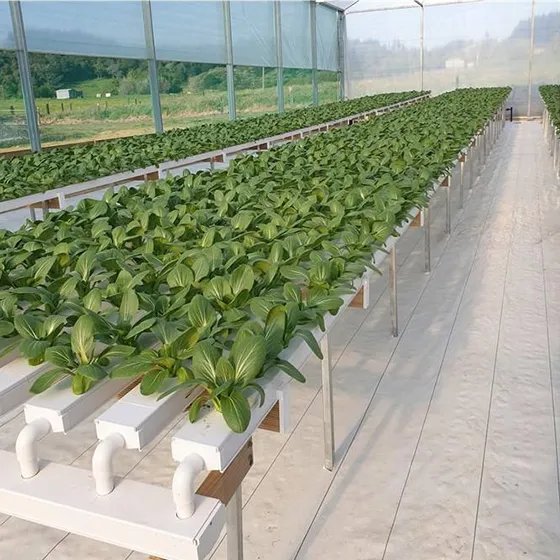
HydroBlue's HT1 Flat Tray Ebb and Flow system uses an intelligent timer to control flood-drain cycles. The nutrient solution is pumped from the reservoir into a wide waterproof tray and then returned after the irrigation phase.
An ebb and flow tray is a flat waterproof growing surface designed to temporarily hold nutrient solution during irrigation.
Plants may be positioned in pots, propagation trays, blocks, or other growing containers on top of the tray. During each irrigation cycle, nutrient solution spreads across the tray before draining back to the reservoir.
HydroBlue's HT1 system uses ABS plastic panels with brackets made from hot-dip galvanized material or thickened aluminum alloy. The published system height is approximately 0.7 m and can be adjusted or customized.
An ebb and flow tray system may be particularly suitable for:
Seedling propagation
Nursery production
Tray-based crops
Smaller commercial production zones
Projects requiring a simple layout
Farms that need flexible crop arrangement
The main advantage is simplicity. Growers can easily access plants, move trays, inspect roots, clean surfaces, and adjust production layouts.
An ebb and flow bench combines a flood-and-drain growing surface with a larger supporting structure designed for commercial production.
Instead of installing individual trays close to the floor, the growing surface is positioned at a practical working height. Depending on the system, benches may be fixed, multi-tiered, or movable.
An ebb and flow bench can improve workflow because workers can carry out irrigation, fertilization, transplanting, monitoring, and harvesting from organized work areas.
HydroBlue's HT3 Rolling Bench Ebb and Flow system includes an ebb-flood tray, roller pipes, anti-tip brackets, heavy-duty supports, and a hand wheel. According to HydroBlue's published product information, the rolling structure can increase space utilization by approximately 20%–30% and reduce labor costs by more than 50% under the stated application conditions.
The main differences between trays and benches relate to scale, working efficiency, and space utilization.
| Factor | Ebb and Flow Tray | Ebb and Flow Bench |
|---|---|---|
| Structure | Flat waterproof tray | Raised or movable bench system |
| Typical Scale | Small to medium cultivation zones | Medium to large commercial production |
| Plant Access | Simple and direct | Designed for organized worker access |
| Space Efficiency | Depends on layout | Rolling versions can reduce permanent aisle space |
| Installation | Relatively simple | More structural components required |
| Flexibility | Easy to rearrange plants | Optimized for standardized production |
| Labor Efficiency | Good for smaller areas | Better suited to repetitive commercial operations |
Neither system is universally better. The right choice depends on how the farm operates.
A flat tray system can be a good choice when production flexibility is more important than maximizing floor-space utilization.
Growers may prefer trays when:
Production volume is moderate
Crops are frequently changed
Seedlings are the main product
Trays or pots need to be moved regularly
Workers need easy access to individual plants
The system needs to remain simple to clean and maintain
HydroBlue's HT1 is designed around this type of straightforward flood-and-drain operation. Its simple structure can make it easier to introduce ebb and flow irrigation without adding unnecessary mechanical complexity.
When floor space is limited, growers may want to increase productive growing area vertically.
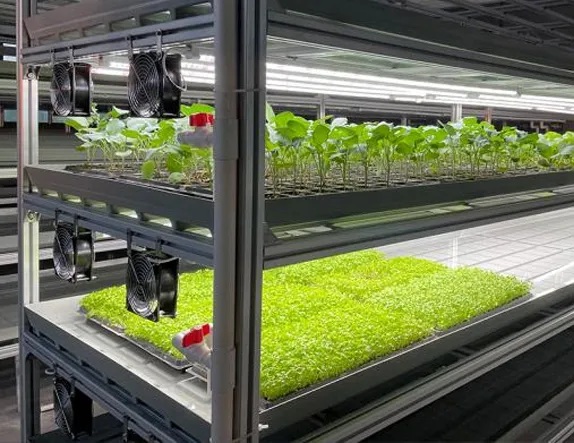
HydroBlue's multi tier ebb and flow system uses stacked growing layers, allowing the cultivation area to expand upward instead of outward.
Each layer can be independently controlled, and HydroBlue states that the system supports optional precision irrigation. The structure uses high-strength steel or corrosion-resistant metal and is designed to provide ventilation and light transmission between layers.
This configuration can be useful for seedling cultivation where crops remain relatively compact and where higher planting capacity is required within a defined floor area.
A rolling bench becomes more attractive when floor-space efficiency and labor productivity are major concerns.
Traditional fixed benches require permanent aisles between growing areas. Rolling benches can shift horizontally, allowing workers to create an access aisle only where it is currently needed.
This means a larger proportion of the available floor area can be used for crops.
For commercial production, this can bring several benefits:
More growing area
Fewer permanent aisles
Easier plant access
More standardized workflows
Reduced walking distance
Better labor efficiency
The trade-off is that rolling benches have more mechanical components and require more planning during installation.
Crop format is one of the most important considerations when comparing trays and benches.
Ebb and flow systems are often well suited to:
Seedlings
Young plants
Nursery crops
Plants grown in pots
Crops grown in propagation blocks
A tray may be enough when crop density is relatively low or when plants need frequent rearrangement.
A bench system becomes more attractive when the crop is standardized, and the same operations are repeated across a larger cultivation area.
For multi-tier systems, growers should also consider mature crop height because insufficient vertical spacing can reduce airflow and make lighting more difficult.
Regardless of whether the system uses trays or benches, uniform flooding and drainage are essential.
Growers should evaluate:
Tray levelness
Water inlet position
Drain location
Pump capacity
Flooding depth
Irrigation duration
Drainage speed
If one area floods more deeply than another, plants may receive inconsistent amounts of water and nutrients.
Commercial systems should therefore be installed on stable structures and tested carefully before full-scale cultivation begins.
Ebb and flow systems recirculate nutrient solution, so trays, reservoirs, pumps, and pipes need regular maintenance.
Flat trays can be relatively easy to inspect because the entire surface is visible.
Bench systems should also provide convenient access to:
Drain fittings
Irrigation pipes
Pump systems
Bench surfaces
Structural supports
Rolling systems additionally require inspection of moving components, rollers, and anti-tip structures.
Ease of maintenance should therefore be included in the purchasing decision rather than considered only after installation.
Before requesting a quotation, growers should define several project requirements:
Crop type
Plant quantity
Growing container size
Available cultivation area
Required planting density
Number of crop cycles
Labor availability
Desired automation level
Future expansion plans
For smaller or flexible production areas, a flat tray can provide a simple and practical solution.
For farms requiring more plants per square meter, a multi-tier system can improve vertical space utilization.
For larger standardized production areas where aisle space and labor efficiency are major priorities, a rolling bench may provide greater operational benefits.
An ebb and flow tray is primarily the waterproof surface used for flood-and-drain irrigation. A rolling bench combines this growing surface with a movable supporting structure that can reduce the amount of permanent aisle space required.
Yes. Flat ebb and flow trays are particularly suitable for seedlings and tray-based nursery production because they provide uniform irrigation and allow plants to be easily moved or rearranged.
Multi-tier systems increase growing area vertically and can provide independently controlled irrigation for different levels. They are especially useful when growers want to increase planting capacity without expanding the floor footprint.
Yes. Rolling benches can reduce the need for fixed aisles by allowing workers to move benches and create an access path only where needed. HydroBlue states that its HT3 system can increase space utilization by approximately 20%–30% under its intended operating conditions.
Buyers should evaluate tray material, support structure, irrigation control, drainage design, planting capacity, labor access, maintenance requirements, customization options, and future expansion needs.
Ebb and flow trays, multi-tier systems, and rolling benches serve different commercial growing requirements. Flat trays offer simplicity and flexibility, multi-tier systems improve vertical space utilization, and rolling benches can increase usable cultivation area while improving labor efficiency.
The best system is the one that matches crop requirements, production scale, available space, and daily farm operations.