- EN
-

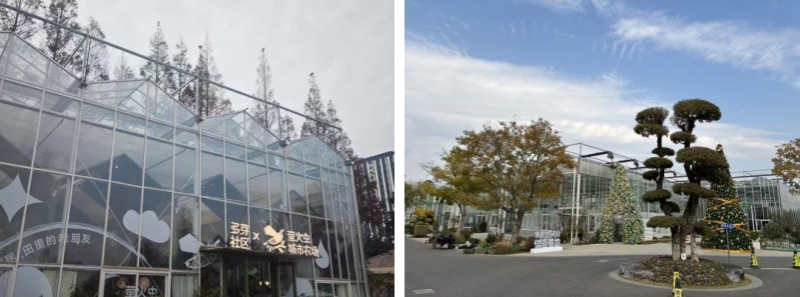
Slate-gray metal frames prop up transparent glass walls, with ruffled white gauze draping from the dome and crystal chandeliers intertwined with cool vines hanging down. Tree shadows drift across the window panes, holding fast to the tenderness of this "natural living room." This is "Duoya Community × Urban Farm" — a glass greenhouse complex filled with hydroponic vegetables, coffee aroma, and kindness, weaving "ecology" into every crevice of daily life.
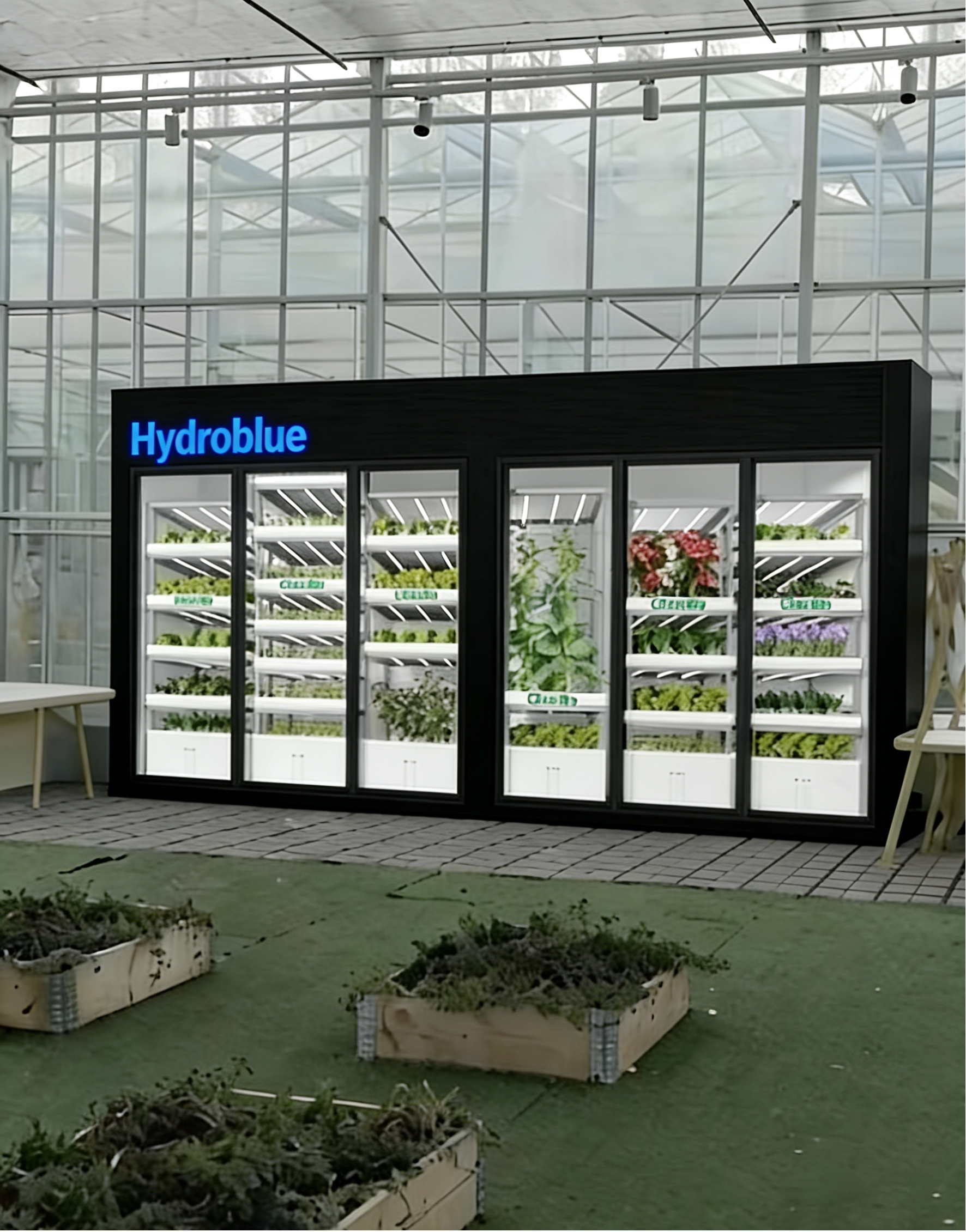
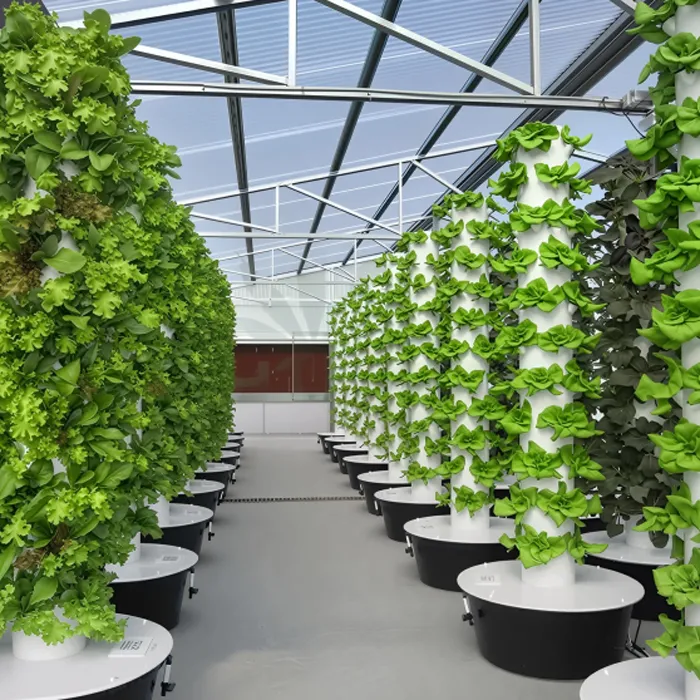
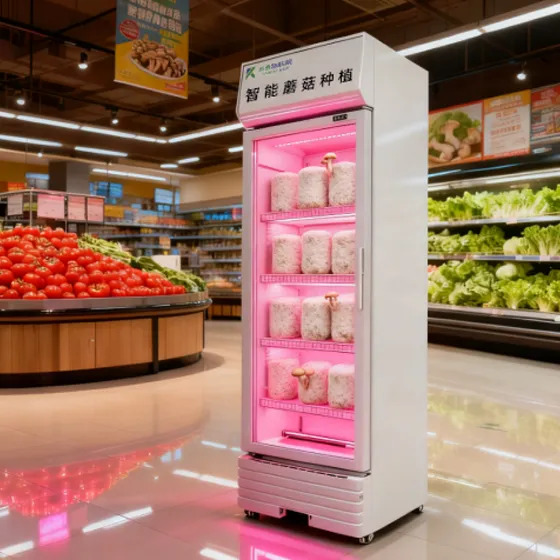
Layered hydroponic racks stand in the corner of the greenhouse. Tender green lettuce and crisp mint stretch their leaves along the nutrient solution, while medicinal and edible herbs like perilla and basil glisten with moisture. The rule here is "pick-and-eat": pluck a lettuce leaf, rinse it under water, and bite into its crispness immediately; select a few mint sprigs, and the bar will add them directly to your iced drink. For a hot meal, freshly picked hydroponic vegetables are quickly turned into a salad on your plate — so fresh that even plastic wrap is unnecessary.
The glass walls reflect the shadows of the hydroponic racks, shrinking the "farm-to-table" distance to just a few seconds between fingertips and lips.
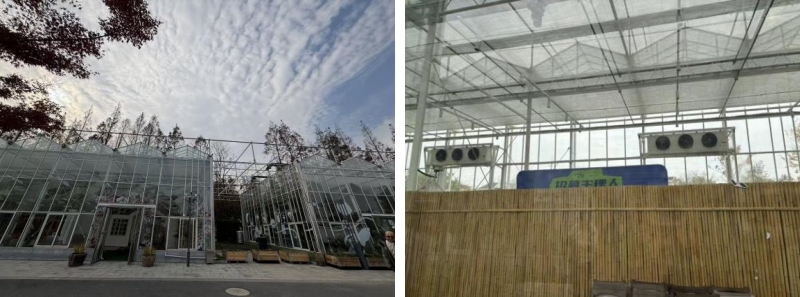
A corner enclosed by gauze and vines holds softer movements — several children squat beside low hydroponic racks, gently touching the veins of the seedlings. This is the public welfare core of the greenhouse: using natural scenes to nurture the inner peace of individuals with autism.
There is no deliberate "treatment," only light agricultural activities: adding a little nutrient solution to the hydroponic vegetables, moving herbs to diffused light, or sitting on lawn cushions watching the vines cascade. The soft light and swaying leaves filter out the noise of the outside world, allowing tense emotions to gradually ease. Even students on study tours gather around, learning "ecological knowledge" from volunteers and growing "kindness" into tangible understanding.
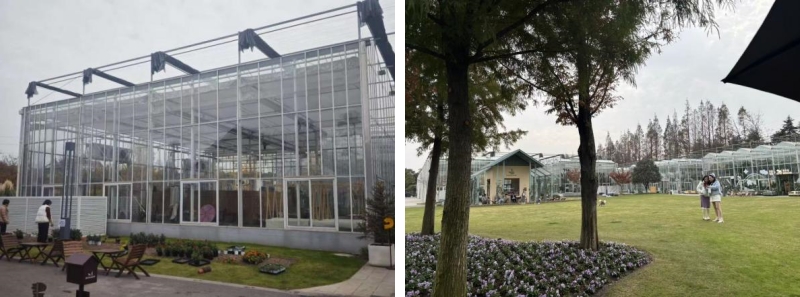
The greenhouse is not just a "farm" — the aroma of coffee lingers around rattan tables and chairs; after ordering, the bar delivers iced Americanos right to your seat with "order-and-deliver" efficiency. Long wooden tables are perfect for gathering with friends to eat, savoring light meals made with freshly picked vegetables while gazing at the tree shadows outside. Even business negotiations take on a relaxed vibe: no need to crowd into stuffy meeting rooms — the light streaming through the glass wraps around the conversation, softening the edge of discussions.
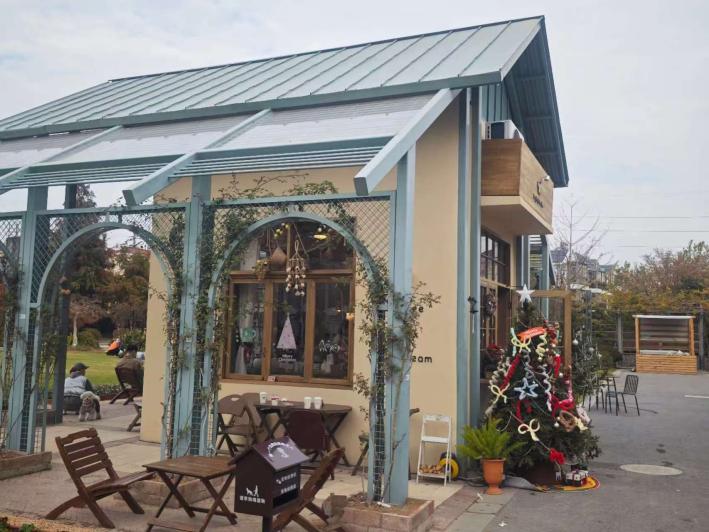
It is a "life hub" for the ecological community: pick a handful of vegetables for breakfast in the morning, order a cup of tea to watch the vines sway in the afternoon, and meet friends for dinner and chat in the evening — turning the "farm" into a livable daily life.
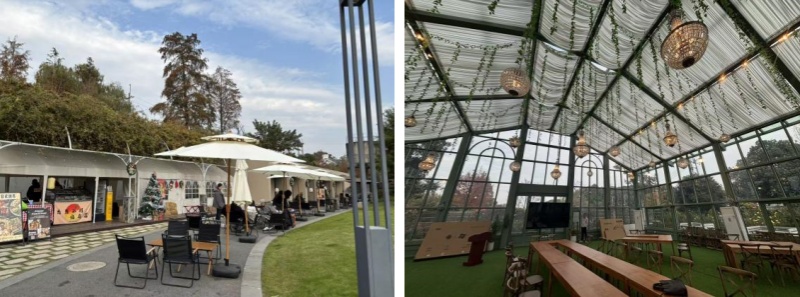
When the glass dome embraces sunlight, greenery, and kindness, the hustle and bustle of business and the warmth of public welfare are no longer opposites. Plucking a handful of hydroponic vegetables is life; accompanying "children of the stars" to stroke the leaves is kindness; sitting on a rattan chair drinking coffee while discussing matters is everyday warmth. The most wonderful thing about this greenhouse is that it makes "ecology" no longer a distant concept — every leaf and every wisp of fragrance nurtures both daily life and the human spirit.