- EN
-

Did you know? In traditional agriculture, nearly 70% of freshwater resources are wasted. However, our Tidal System only requires 10% of the water used in traditional irrigation, yet can increase crop yields by 20%.
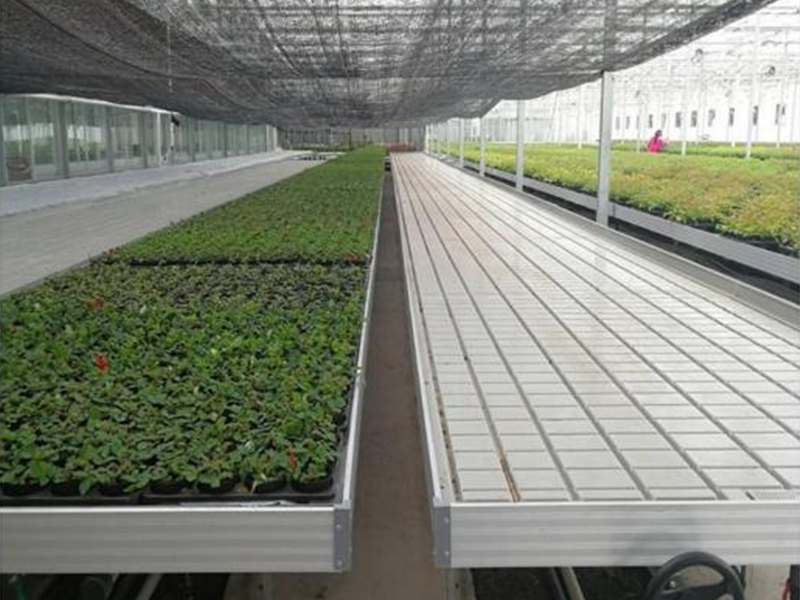
By simulating the ebb and flow of natural tides, the Tidal System allows plant roots to cycle between "respiration periods" and "nutrient absorption periods" — avoiding root rot due to oxygen deficiency while ensuring efficient nutrient uptake. Laboratory data shows that strawberry seedlings in the Tidal System take root 1.8 times faster, with a 23% increase in biomass accumulation.
Three years ago, in a glass greenhouse project in the Egyptian desert, we replaced the drip irrigation system with HT2 ebb-and-flow seedbeds. That month, water bills dropped by 87%, and the lettuce harvesting cycle was shortened by 5 days. This is the charm of intelligent tidal agriculture — it is not just simple water conservation, but a reconstruction of the golden rhythm of plant growth.
Winter wheat on the North China Plain consumes an average of 400 cubic meters of water per mu, while rice cultivated using the Tidal System only requires 35 cubic meters. The water resource crisis in traditional agriculture is precisely the breakthrough point for tidal technology.
The HT3 tray of the Tidal System is made of food-grade PP material, and the frequency of water level rise and fall is controlled programmatically (accurate to 2 millimeters per minute), providing customized irrigation plans for different crops. Comparative tests show that tomato fruit sugar content increases by 14.7% and fruit cracking rate decreases by 62% in the tidal environment.
Our engineers have developed three sets of solutions for different agricultural scenarios:
Floating Seedbed (HT1): Suitable for rice/aquatic vegetables, with construction costs 40% lower than traditional paddy fields.
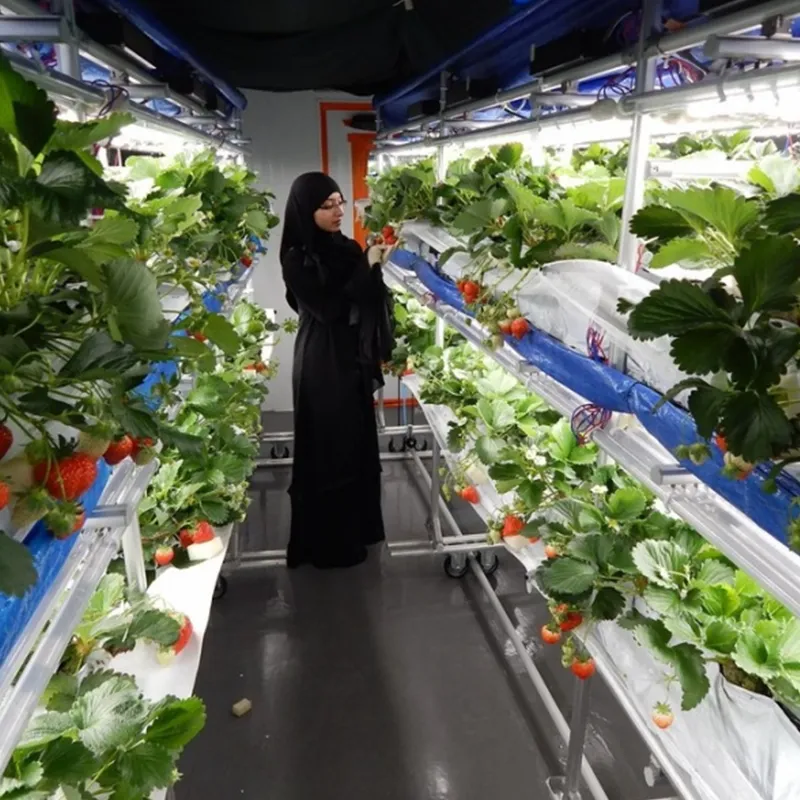
Tidal Plug Tray (HT2): Specialized for strawberries/solanaceous fruits, compatible with carbon dioxide enhancement systems.
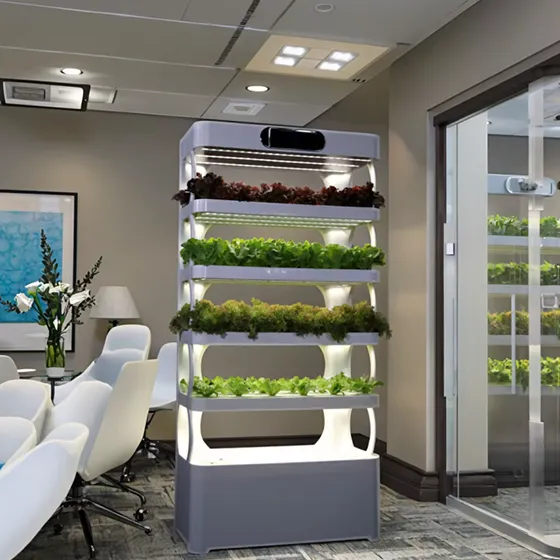
Layered Tidal Rack (HT3): Solves the problem of space utilization for lettuce/herbs.
Especially in the field test at a strawberry base in Jiangsu, the Tidal System overcame the continuous cropping obstacle through the following innovative designs:
| Technical Pain Point | Traditional Solution | Tidal Solution |
| Soil-Borne Diseases | Chemical Fumigation | Periodic water flow to flush pathogens |
| Low Fertilizer Utilization | Increased Topdressing Frequency | Reciprocal circulation and absorption of nutrient solution |
| Root Oxygen Deficiency | Drilling for Aeration | Automatic water drainage to create respiration windows |
When a Japanese plant factory used the Tidal System to grow ready-to-eat spinach on an 18-layer three-dimensional rack, the yield per square meter reached 11 times that of a traditional greenhouse. The dual compression of space and resources is the ultimate proposition of urban agriculture.
The secret of tidal vertical farms lies in its gravity-driven design: nutrient solution flows through cultivation troughs on each layer from top to bottom, and is finally recycled by a water pump. A pilot project in Guangzhou proved that the unit energy consumption of a 10-meter-high HP2 pineapple tower is 55% lower than that of traditional container farms.
Our newly developed intelligent tidal controller is equipped with three major black technologies:
Capacitive water level sensor (error ±0.5mm)
Dynamic compensation algorithm for nutrient solution EC value
AI diagnostic system for root development
In the "Sky Vegetable Garden" project in downtown Shanghai, these technologies enabled:
21 consecutive harvests of Chinese cabbage throughout the year
Failure rate reduced to 0.3 times per 1,000 hours
Comprehensive cost per kilogram of vegetables is controlled at 2.4 yuan
Tidal technology is reshaping the cultivation logic from desert greenhouses to skyscraper farms with its revolutionary breakthrough of "water conservation without yield reduction". Fifteen years of patent accumulation have been dedicated to making every drop of water create maximum value.