- EN
-
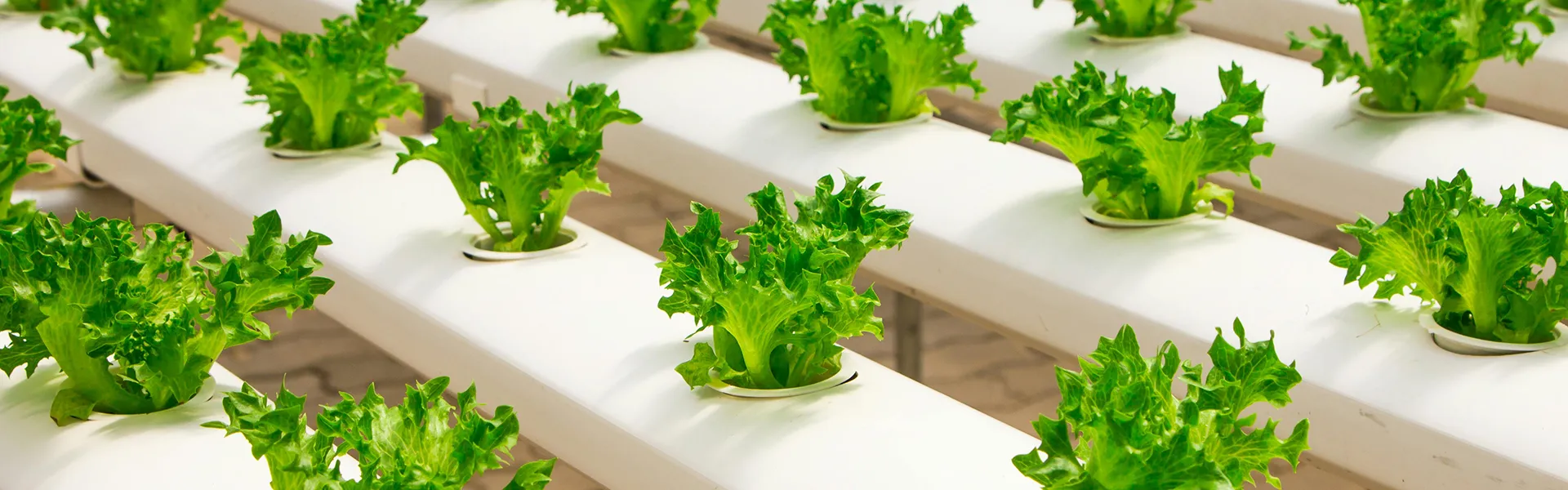
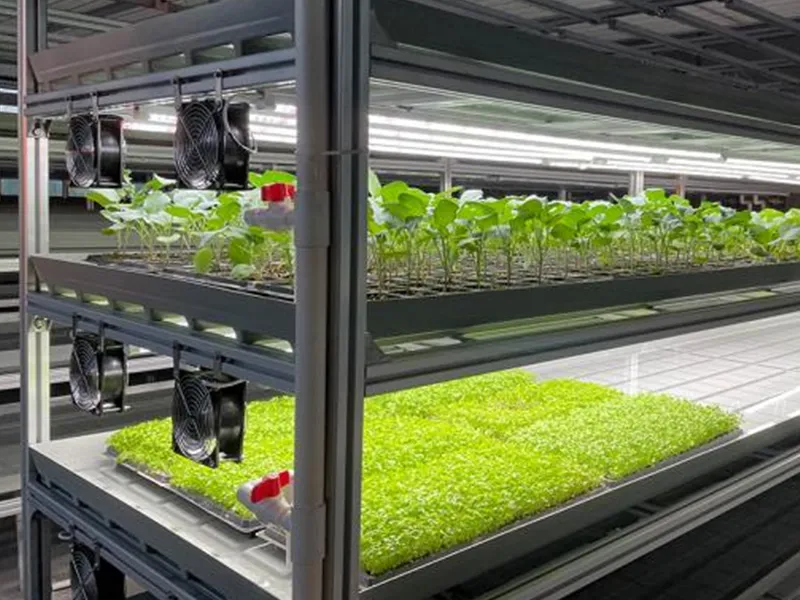
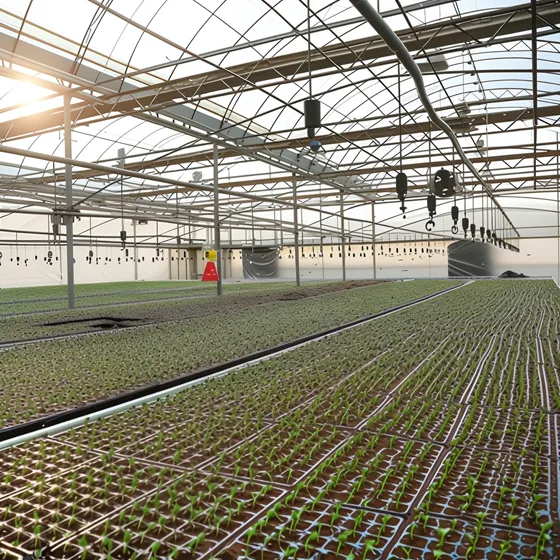
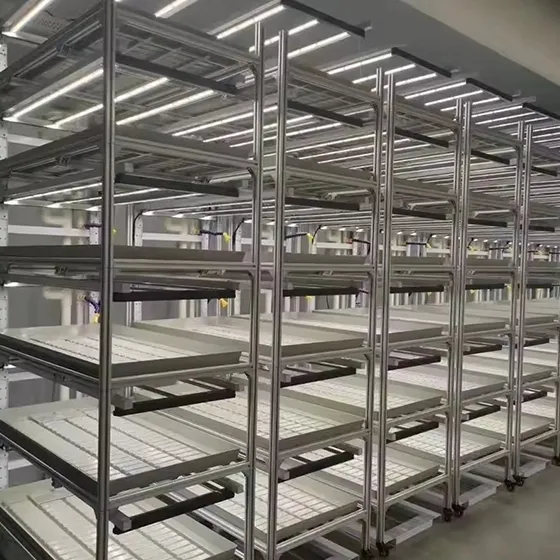
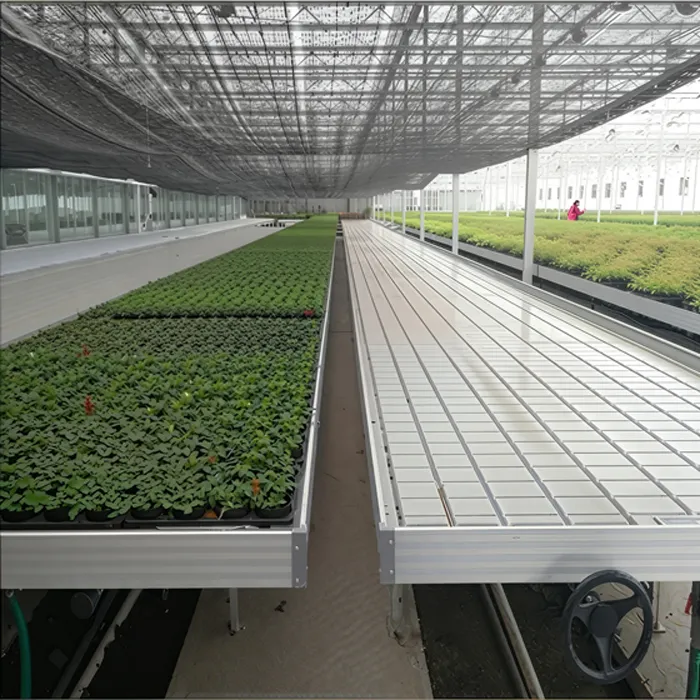
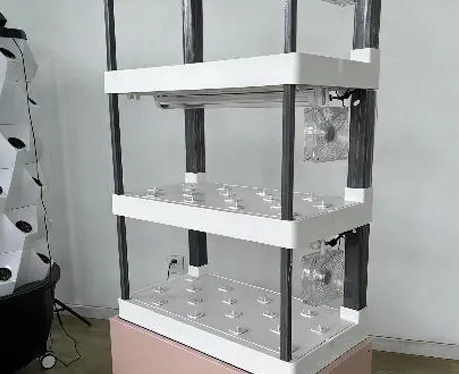
Tidal seedbed is injected from under the cultivation substrate, and the remaining liquid can be recycled after irrigation, reducing waste.
Traditional seedbed relies on greenhouse sprinkler or manual watering from above, and excess water is directly lost and wasted.
The tidal seedbed material is an ABS panel, which is corrosion-resistant.
The traditional seedbed is hot-dip galvanized welded mesh.
Tidal water saving is efficient, up to 90%, while traditional water and fertilizer saving advantages are not available.
The tidal type can complete 0.2-0.5 ha in 20-30 minutes, which is more efficient than the traditional type.
The tidal seedbed system is equipped with tracks, and the seedbed can be automatically transplanted to different functional areas, reducing manual handling and improving the utilization rate of greenhouse space by more than 20%. As a leading option in hydroponic equipment wholesale, the closed water and fertilizer circulation system can recycle 90% of the nutrient solution, reduce water consumption by 90%, reduce fertilizer consumption by 30%, and significantly reduce the cost of large-scale production. Tidal seedbed plants grow rapidly, and the weekly seedling age is one day earlier than the traditional seedling method, improving facility utilization.
The conductivity (EC) and pH of nutrient solution were checked daily, and the EC of leafy vegetables was recommended to be maintained at 1.2–1.8 mS/cm.
In summer, the liquid cooling system was used to maintain the temperature of the nutrient solution at 18–22°C. In winter, it needs to be heated and protected from freezing.
Regularly clean the light transmission surface of the greenhouse to ensure more than 70% light transmittance.
After each crop is harvested, the high-pressure water gun rinses the seedbed net to remove root attachments. Check the rust of the galvanized layer. Primary filter daily rinsing; Intermediate filter is cleaned weekly; Activated carbon/UV modules are replaced every six months.
Water/nutrient solution is injected from under the cultivation substrate through the water outlet at the bottom of the bed, which rises to the plant roots by capillary action. The remaining liquid can be recycled after irrigation. Fully enclosed system circulation with up to 90% utilization and uses less water than other methods.
EC is too low (nutrients are too thin), supplement concentrated nutrient solution or reduce the amount of water. If the EC is too high (too rich in nutrients), dilute it with water or replace part of the nutrient solution.