- EN
-
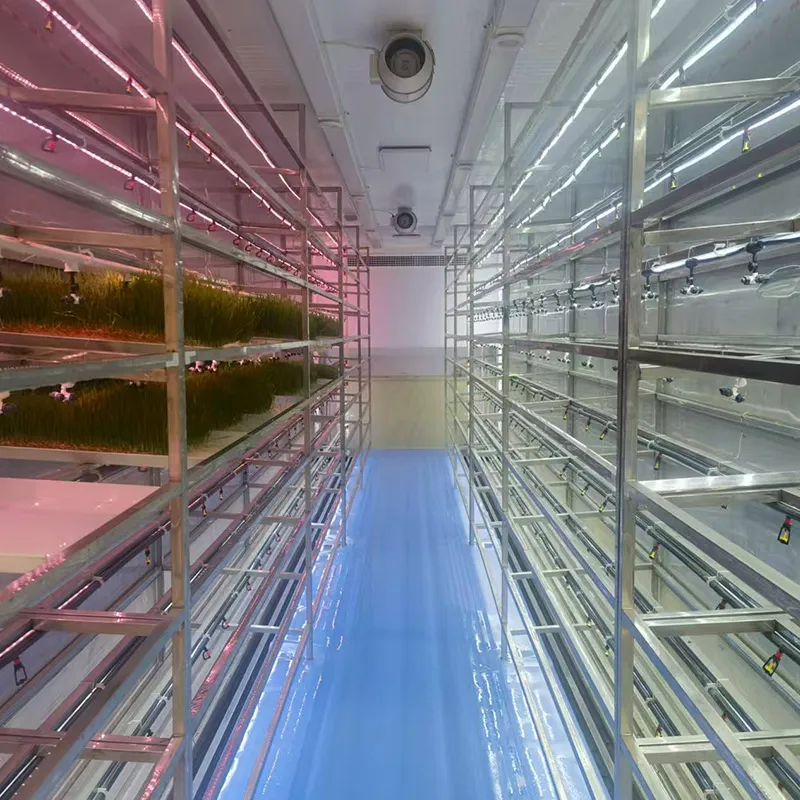
Hydroponic grow containers allow commercial growers to produce crops under controlled environmental conditions throughout the year, regardless of seasonal weather fluctuations. By integrating cultivation structures, irrigation, climate control, lighting, monitoring, and crop-specific growing equipment into an enclosed production unit, they turn cultivation into a more standardized and repeatable manufacturing-like process.
For commercial operators, the primary value is not simply having an indoor growing space. It is the ability to control the variables that directly affect crop development, establish repeatable production cycles, and replicate successful cultivation conditions as the business expands.
A conventional outdoor farm remains exposed to temperature changes, rainfall, drought, wind, seasonal light availability, and pest pressure. These factors can influence planting schedules and make production volumes difficult to maintain consistently.
A hydroponic container creates a defined production environment in which key variables can be actively managed. Temperature, humidity, irrigation, nutrient delivery, airflow, and lighting can be adjusted according to crop requirements rather than outdoor conditions.
This makes containerized production particularly useful for commercial growers supplying customers throughout the year. Instead of planning production solely around local growing seasons, operators can establish crop cycles based on demand, production capacity, and harvesting schedules.
A properly engineered hydroponic container can integrate several functions within one controlled unit, including:
Hydroponic growing structures
Nutrient and irrigation systems
Environmental monitoring
Temperature and humidity control
Artificial lighting
Ventilation and air circulation
Automated control systems
The exact configuration should depend on the intended crop rather than treating every container as a universal growing environment.

Commercial agriculture depends heavily on consistency. A buyer may require a certain quantity, quality, size, or harvest schedule, and irregular production can create problems throughout the supply chain.
Container cultivation reduces exposure to external environmental variation. Once a suitable growing recipe has been established, operators can record temperature, humidity, nutrient concentration, irrigation cycles, lighting schedules, and crop performance.
These records can then be used to refine subsequent cycles.
The resulting production loop is:
environmental settings → crop response → production data → adjustment → repeatable cycle
This is particularly valuable when multiple containers are deployed. A successful production configuration can potentially be reproduced in additional units without redesigning an entire cultivation facility.
Crop selection should be one of the first considerations when planning a commercial container farm.
Leafy vegetables generally require compact root zones and efficient nutrient delivery. Strawberries need growing structures that provide adequate drainage, airflow, and access to the fruiting canopy. Fruiting vegetables require more vertical space and structural support.
| Crop type | Important design considerations | Commercial focus |
|---|---|---|
| Leafy greens | Plant density, shallow root zone, uniform irrigation | Fast cycles and output per area |
| Strawberries | Drainage, canopy airflow, fruit access | Fruit quality and consistency |
| Tomatoes | Root volume, plant support, vertical clearance | Yield and structural stability |
| Cucumbers | Vertical support and airflow | Crop density and harvesting access |
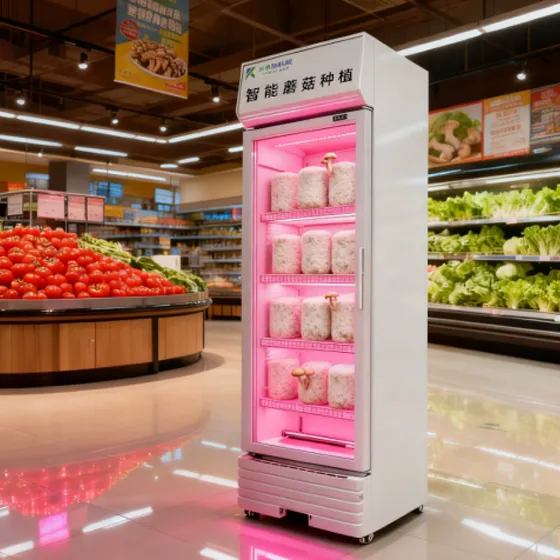
| Mushrooms | Humidity, temperature, fresh-air exchange | Environmental stability |
| Forage crops | High-density cultivation and rapid turnover | Biomass production |
The commercial objective should therefore be to select a container configuration that matches the biological requirements of the target crop.
Scalability is one of the strongest characteristics of containerized agriculture.
A traditional indoor farm may require additional building space when production increases. A modular container strategy can allow a business to add production capacity through additional units, assuming utilities, labor, logistics, and environmental management have been planned accordingly.
A commercial hydroponic container farming project should therefore be assessed at both the individual-unit and farm level.
Important planning factors include:
Production capacity per container
Electricity consumption
Water requirements
HVAC load
Labor requirements
Cleaning procedures
Crop turnover
Container placement
Utility connections
Future expansion requirements
A container that produces excellent results as a standalone unit may still create operational problems if multiple units cannot be serviced efficiently.
Controlled-environment agriculture provides greater production control, but climate control and artificial lighting can also create substantial energy demand.
The energy profile should therefore be evaluated before installation.
Insulation helps reduce heat exchange between the cultivation environment and outside conditions. Efficient lighting can reduce electricity consumption while maintaining the required light intensity. Proper airflow design can also prevent unnecessary HVAC load caused by uneven heat distribution.
Commercial buyers should consider:
| Energy factor | Why it matters |
|---|---|
| LED lighting power | Influences daily electrical consumption |
| HVAC capacity | Determines temperature-control demand |
| Insulation | Reduces external heat transfer |
| Ventilation | Influences both climate and energy load |
| Pump operation | Contributes to continuous electrical demand |
| Crop cycle length | Determines cumulative energy use |
The purchase price of the container should therefore not be evaluated independently from its expected operating cost.
Automation becomes increasingly valuable as production volume increases.
Sensors can monitor environmental conditions while control systems manage irrigation, lighting, ventilation, temperature, and humidity according to predefined parameters. Remote monitoring can also alert operators when a variable moves outside the target range.
The most useful automation is not necessarily the most complicated. It should reduce repetitive work, improve consistency, and allow operators to concentrate on crop inspection and production management.
For businesses evaluating hydroponic farming equipment, the compatibility between individual components is therefore just as important as the specifications of each component.
A commercial hydroponic grow container should be evaluated as an integrated production system rather than simply as an enclosed room.
Before ordering, buyers should confirm:
Which crops the configuration is designed for.
What growing method is included.
What environmental parameters can be controlled.
What lighting system is provided.
How irrigation and nutrient circulation are managed.
What monitoring and automation functions are available.
How components can be accessed for maintenance.
What utilities are required at the installation site.
Whether the internal layout can be customized.
Whether the configuration can be replicated for future expansion.
Container dimensions alone do not provide a meaningful estimate of commercial output.
A more useful calculation considers:
usable growing area × planting density × marketable yield × crop cycles per year
This approach accounts for the fact that increasing plant density does not necessarily increase profitable output. Lighting, airflow, labor access, root-zone conditions, and harvesting efficiency can all become limiting factors.
The most effective container design is therefore one that balances production density with environmental stability, energy consumption, maintenance access, and labor efficiency.
The central advantage of hydroponic grow containers is environmental control. They allow commercial growers to reduce dependence on external weather, establish repeatable cultivation conditions, and expand production through standardized units.
For businesses pursuing year-round production, the most important question is not simply how many plants can fit inside one container. It is whether the complete system can maintain the required crop conditions consistently and economically across repeated production cycles.